

Estate agents in Nigeria are licensed intermediaries who manage the full property transaction process, from sourcing listings to coordinating legal documentation, earning commissions only when deals close. Understanding how estate agents work in Nigeria protects you from fraud, commission disputes, and costly mistakes in one of Africa's most active real estate markets. The real estate agency process in Nigeria involves multiple professionals, strict regulatory bodies, and a legal framework that is actively changing in 2026. This guide breaks down every stage of how realtors operate in Nigeria, what they charge, and what you should verify before signing anything.
How do estate agents earn commissions in Nigeria?
Estate agents in Nigeria earn commissions on successful transactions, typically between 5% and 10% of the sale price for property sales and 5% to 10% of annual rent for lettings. That means on a ₦50,000,000 property sale at a 5% rate, the commission totals ₦2,500,000. That figure is then split between the individual agent and the agency, usually on a 40/60 or 50/50 basis, so the agent personally receives between ₦1,000,000 and ₦1,250,000 from that single deal.
Commission splits vary by agency size and agent experience. Newer agents at established firms often receive 40% of the commission, while senior agents or those who source their own clients negotiate closer to 60% or more. Independent agents working without an agency retain the full commission but carry all overhead and liability themselves.
Lagos State's proposed 2026 tenancy reforms would cap agency commissions at 5% of annual rent for lettings, a significant reduction from the 10% to 20% rates many Lagos agents currently charge. Until that bill is enacted, the older 2011 fee rules remain in force. This reform signals that regulators are responding to tenant complaints about excessive upfront costs, and agents who have not adjusted their practices face real financial and legal exposure.
One critical legal point: commission entitlement requires a written agency agreement and proof that the agent was the effective cause of the transaction. Nigerian Supreme Court rulings have confirmed that simply introducing a buyer to a seller is not enough to claim commission. Always get your agency agreement in writing before any work begins.
| Commission Type | Typical Rate | Example (₦50M Property) |
|---|---|---|
| Property sale | 5%–10% | ₦2,500,000–₦5,000,000 |
| Annual rent (letting) | 5%–10% of annual rent | Varies by rent value |
| Proposed Lagos cap (lettings) | 5% | Pending 2026 enactment |
| Agent's share of commission | 40%–50% | Depends on agency split |
What legal and regulatory frameworks govern estate agents in Nigeria?
Two bodies dominate estate agent regulation in Nigeria, and confusing them is a common and costly mistake. ESVARBON regulates estate surveyors and valuers nationally, covering professionals who assess property values. LASRERA, the Lagos State Real Estate Regulatory Authority, is the mandatory licensing body for all real estate practitioners operating in Lagos, including agents who are not surveyors or valuers. If you are in Lagos, LASRERA registration is not optional regardless of your ESVARBON status.
LASRERA requires agents to register, renew their licenses annually, and comply with conduct standards. Failure to register carries fines and penalties. The proposed 2026 Lagos tenancy bill strengthens these penalties further, adding imprisonment as a possible consequence for unregistered agents engaging in fraudulent practices. This is not a theoretical risk. Lagos State has increased enforcement activity, and clients who work with unregistered agents have limited legal recourse when disputes arise.
Outside Lagos, the regulatory picture is less uniform. States like Abuja (FCT), Rivers, and Ogun have their own property laws, but enforcement varies significantly. Nationally, the Nigerian Institution of Estate Surveyors and Valuers (NIESV) represents the professional body for qualified surveyors, but it does not license general property agents the way LASRERA does in Lagos.
Here is what to verify before engaging any estate agent in Nigeria:
- Confirm LASRERA registration if the agent operates in Lagos (request their license number and verify it on the LASRERA portal)
- Check ESVARBON registration if the agent offers valuation services
- Request proof of professional indemnity insurance
- Confirm the agent has a physical office address, not just a social media profile
- Ask for references from at least two completed transactions in the past 12 months
Pro Tip: Ask any Lagos-based agent for their LASRERA license number before the first meeting. A legitimate agent will provide it immediately. Hesitation or vague answers about "pending registration" are a clear warning sign.
Increasing professionalism and enforceable licensing standards are the primary tools for reducing fraud in Nigeria's real estate sector. The regulatory framework is improving, but the burden of verification still falls on you as the client.
What steps do estate agents follow in a Nigerian property transaction?
The real estate agency process in Nigeria follows a structured sequence, though the timeline varies widely depending on property type, location, and whether financing is involved. Understanding each stage helps you track progress and identify when an agent is not delivering.
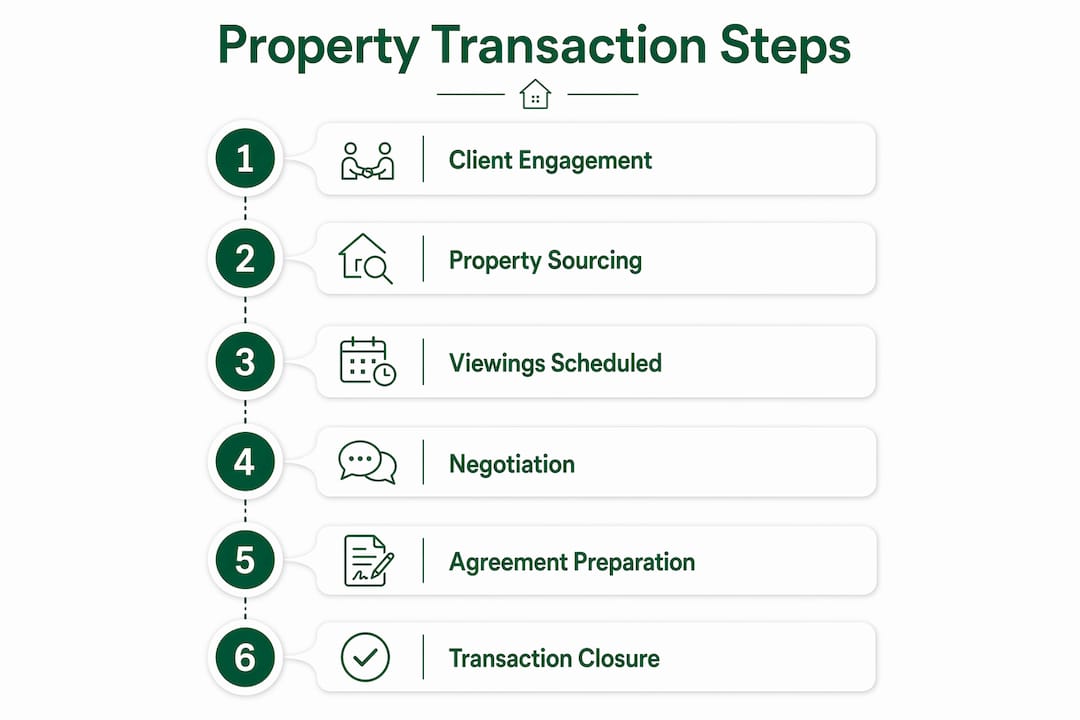
The process begins with client engagement and property sourcing. Agents list properties on platforms like PropertyPro and NPC (Nigerian Property Centre), market through social media, and maintain databases of available stock. For buyers and renters, agents conduct needs assessments to match clients to suitable properties. For sellers and landlords, agents advise on pricing based on comparable transactions in the area.

Property viewings come next. A professional agent schedules multiple viewings, provides honest assessments of each property's condition, and flags visible defects. This is where the agent's local knowledge adds real value. An agent who knows Lekki Phase 1 or Maitama intimately can tell you which streets flood in July or which developments have title problems.
Negotiation follows viewings. The agent represents their client's interests in price and terms, though in Nigeria it is common for agents to represent both parties simultaneously. This dual agency creates conflicts of interest. If your agent is also representing the seller, their incentive is to close the deal quickly, not to get you the best price. Clarify this arrangement upfront.
Once terms are agreed, the agent coordinates preparation of Sale and Purchase Agreements, Deeds of Assignment, and the process of obtaining Governor's Consent, which is mandatory for land transactions in most Nigerian states. The agent does not draft these documents. That is the lawyer's role. The agent's job is to keep all parties moving, collect required documents, and communicate between buyers, sellers, lawyers, valuers, and the land registry.
The transaction closes when all documents are executed, taxes and fees are paid, and the title is registered. The agent then facilitates physical handover of the property.
Why is due diligence critical in Nigerian real estate transactions?
Due diligence in Nigerian real estate is not a formality. It is the primary defense against fraud, and the risks are specific and well-documented. Buyers face risks including forged title documents, land grabbing, unresolved family disputes, and missing Governor's Consent. Each of these can render a purchase legally void after you have paid in full.
Estate agents support due diligence by coordinating the process, but they do not replace legal or technical professionals. The agent can arrange a land registry search, organize a physical inspection, and flag obvious title issues. The lawyer verifies title documents, conducts litigation checks, and confirms that Governor's Consent has been obtained or is obtainable. The surveyor confirms that the physical boundaries of the property match the survey plan on record.
Pro Tip: Never rely on a title document the seller or agent provides directly. Always conduct an independent land registry search through a qualified lawyer. In Lagos, this search is done at the Lagos State Land Registry in Alausa, Ikeja.
| Due diligence task | Who performs it |
|---|---|
| Land registry title search | Lawyer (independently commissioned) |
| Physical property inspection | Surveyor or structural engineer |
| Survey plan verification | Licensed surveyor |
| Litigation and encumbrance check | Lawyer |
| Planning approval confirmation | Agent or lawyer |
| Document authentication | Lawyer |
Technology and AI tools are shifting how agents support due diligence, with digital listing verification and automated document checks becoming more common. However, agents using these tools must still coordinate traditional verification steps. Digital tools reduce time and cost but do not replace the legal and surveying professionals who carry professional liability for their findings.
Key takeaways
Estate agents in Nigeria coordinate property transactions from sourcing to handover, but their effectiveness depends entirely on proper licensing, written agreements, and professional due diligence support.
| Point | Details |
|---|---|
| Commission rates | Sales commissions run 5%–10%; lettings commissions face a proposed 5% cap in Lagos under 2026 reforms. |
| Written agreements matter | Nigerian Supreme Court rulings confirm agents need a written agreement to legally claim commission. |
| LASRERA is mandatory in Lagos | All Lagos agents must register with LASRERA regardless of ESVARBON or NIESV membership. |
| Agents coordinate, lawyers execute | Estate agents manage the transaction process; lawyers and surveyors handle legal and technical verification. |
| Due diligence is non-negotiable | Independent land registry searches and litigation checks protect buyers from forged titles and land disputes. |
What I've learned about trusting estate agents in Nigeria
After years of tracking Nigeria's real estate market, the single biggest mistake I see buyers and renters make is treating the agent as the authority on everything. The agent is a coordinator, not a legal expert, not a valuer, and not a title guarantor. The moment you conflate those roles, you are exposed.
The agents who consistently deliver good outcomes are those who combine genuine local knowledge with digital tools. An agent who uses PropertyPro data to benchmark pricing, cross-references listings on NPC, and still knows which Lagos neighborhoods have pending government acquisition orders is worth their commission. An agent who only forwards WhatsApp listings and pressures you to decide quickly is not.
I have also seen too many commission disputes that were entirely avoidable. Both sides sign nothing, the deal closes, and then the argument starts over who introduced whom and when. Clear documentation of agency agreements and negotiation timelines is the only protection against this. If your agent resists putting the agreement in writing, that tells you everything you need to know about how they operate.
The 2026 Lagos tenancy reforms are a genuine shift. Agents who have been charging 10% to 15% agency fees on lettings are going to face client pushback and potential penalties. The agents who adapt, register properly with LASRERA, and compete on service quality rather than information asymmetry will be the ones still operating in five years. Choose those agents now.
— Larry
Find verified properties and trusted agents on Homerentnigeria
Homerentnigeria connects you with over 12,000 verified property listings across Nigeria, backed by NIN and biometric KYC checks for both landlords and agents. Every listing on the platform meets identity verification standards that most property portals do not enforce.
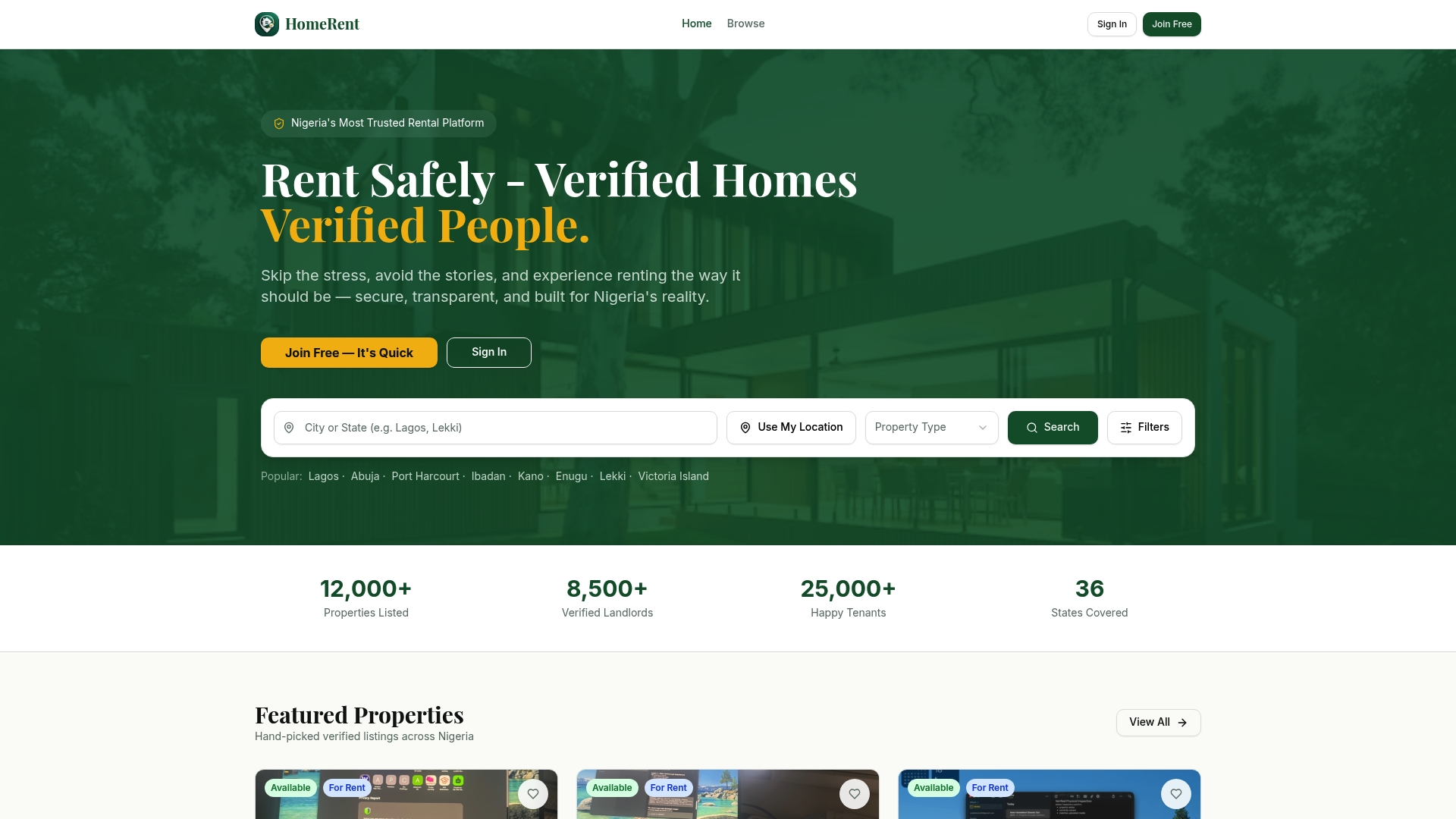
If you are searching for rental properties, the rental listings on Homerentnigeria give you direct access to verified agents and landlords without the risk of dealing with unregistered intermediaries. You can also save properties you are considering and track new listings through the platform's notification system. For buyers and renters who want a safer, more transparent experience in Nigeria's real estate market, Homerentnigeria is the place to start.
FAQ
What does an estate agent do in Nigeria?
Estate agents in Nigeria manage the full property transaction process, including sourcing listings, conducting viewings, negotiating terms, and coordinating legal documentation between buyers, sellers, lawyers, and valuers.
How much do estate agents charge in Nigeria?
Agents typically charge 5% to 10% of the sale price for property sales and 5% to 10% of annual rent for lettings. Lagos State's proposed 2026 tenancy reforms would cap letting commissions at 5% of annual rent.
Do estate agents in Nigeria need a license?
In Lagos, all real estate practitioners must register with LASRERA, the Lagos State Real Estate Regulatory Authority. Operating without registration carries fines and, under the proposed 2026 tenancy bill, potential imprisonment.
Can an estate agent handle due diligence for a property purchase?
Agents coordinate due diligence activities like land registry searches and property inspections, but buyers should independently engage lawyers and surveyors for legal verification and technical assessments. Relying solely on the agent for title verification is a significant risk.
What is the difference between ESVARBON and LASRERA?
ESVARBON regulates estate surveyors and valuers at the national level, while LASRERA is Lagos State's authority that licenses all real estate practitioners, including agents who are not surveyors. Lagos agents need LASRERA registration regardless of their ESVARBON status.